How to Read the Husbandry Charts
I have a chart for each species because obviously each can be different. But there are many similarities.
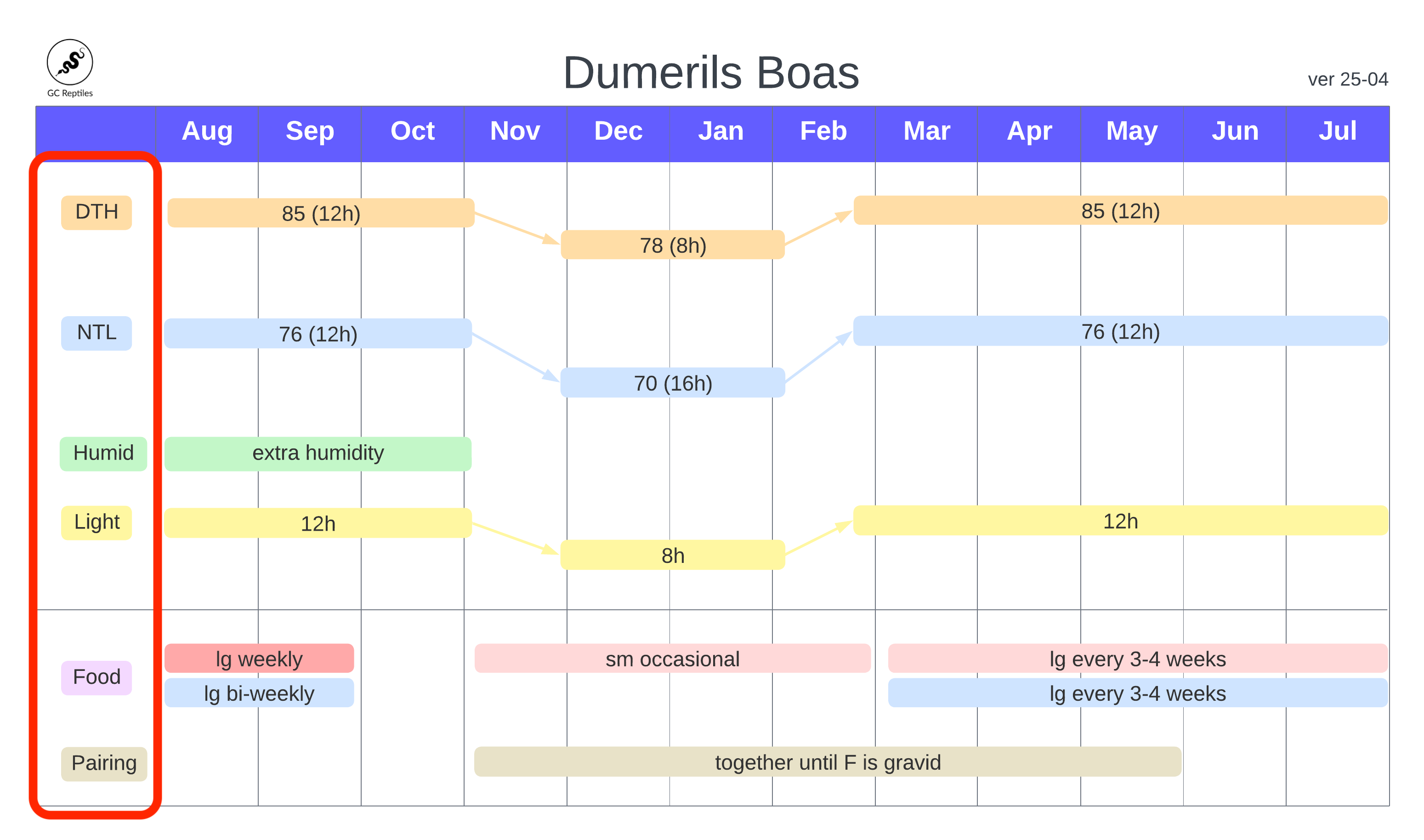
For each species, there are 6 elements of their care that I track throughout the year. These elements are shown on the left side of each chart. They are:
- Their daytime high temperature
- Their nighttime low temperature
- Whether they need the humdity increased above normal levels in the room
- Light cycling
- Feeding, split by males and females
- When to pair males and females for breeding
Temperatures
At the top of the charts are the temperature settings.
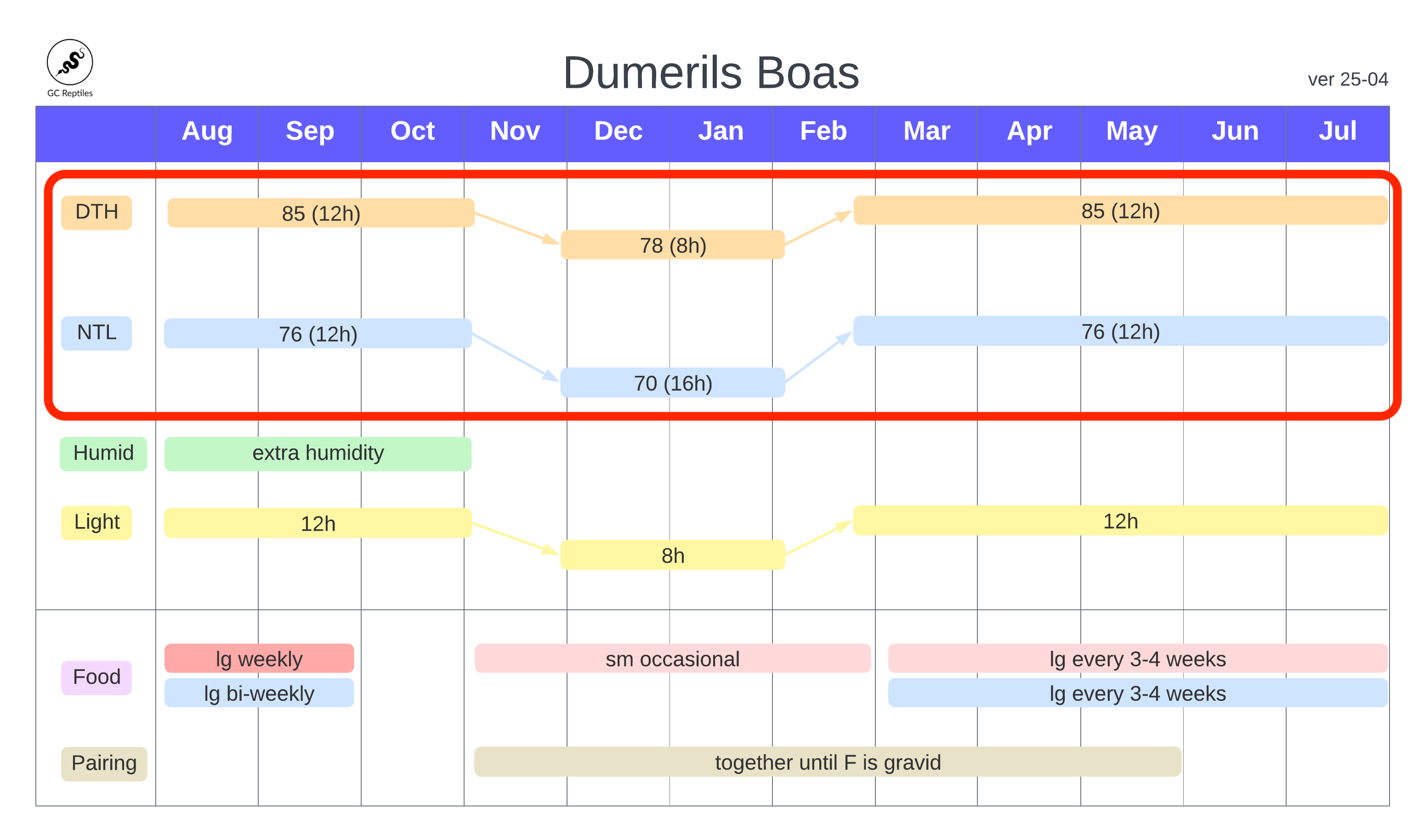
Most of my animals are in cages so I’m going to describe the things I do with the cages.
Each cage has a radiant heat panel in the ceiling on one side of the cage. Having it on the side helps provide a warm-to-cool temperature gradient within each enclosure. This is important.
Basking Spots
For each cage, I plan on one or more basking spots for the snake. The basking spot is the place, where I expect the snake to go when it needs some additional heat, usually during the first couple of days after it eats, or for females to use when they are gravid (pregnant). The basking spot might be on the ground, or up in the branches.
Daytime High (or DTH)
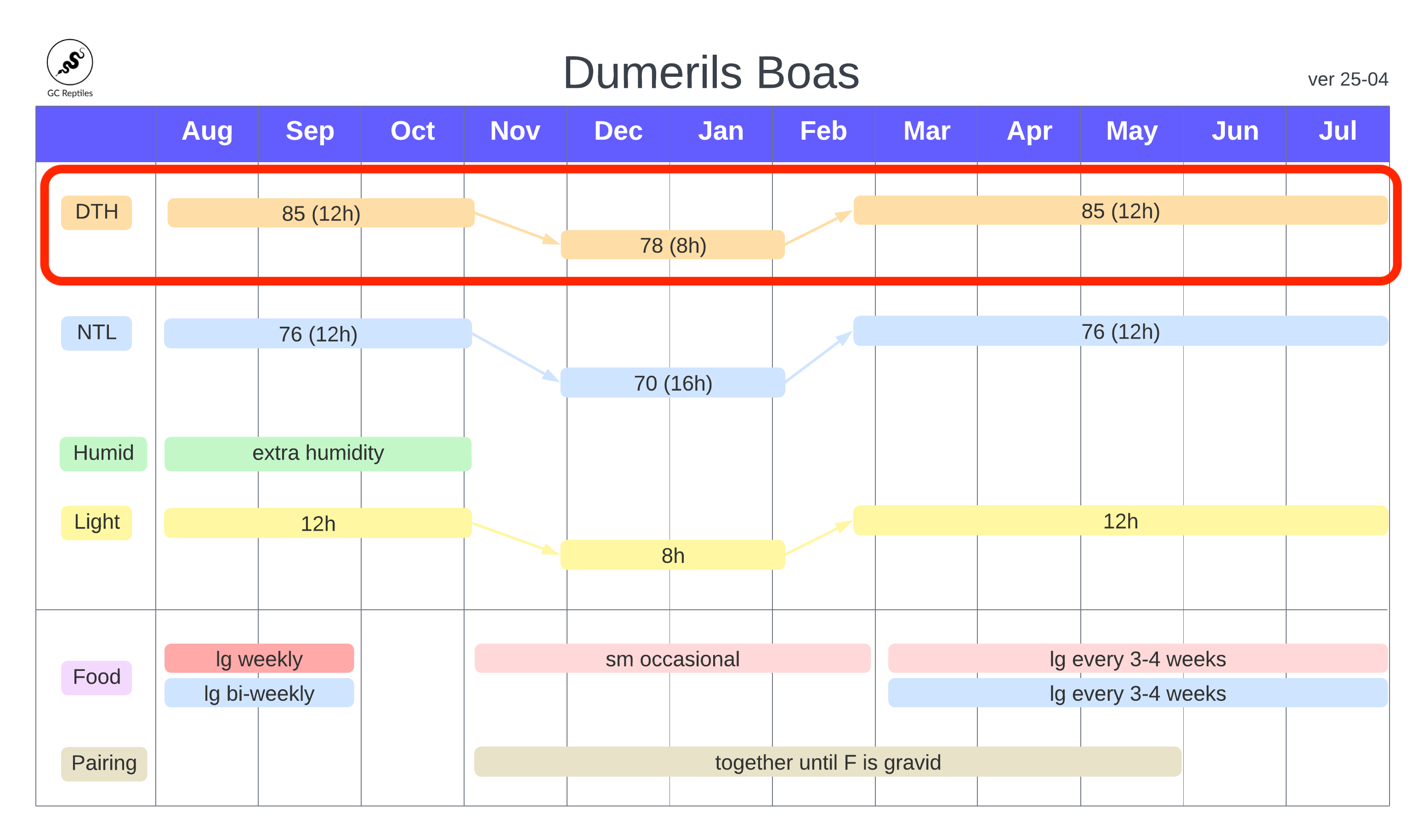
The “daytime high” temperature is the highest the temperature gets during the day at the basking spot. So for example, if I say the daytime high for a boa is “85F (12h)”, then the temperature will measure 85F at the basking spot under the heat panel for about 12 hours each day. However, the cooler side of the cage will be 4-7 degrees cooler. This way the snake can choose what temperature it wants to be at.
In the morning, the set point of the thermostat is set to a temperature that will get the basking spot up to the desired daytime high. The thermostat turns on the heat panel and the temperature rises pretty quickly.
But setting the thermostat’s temperature to the value I want doesn’t always mean the basking spot will go to exactly that temperature. So I put the thermostat’s probe as close as I can to where I want the animal to be when it basks, but I also use a temperature gun and/or a second hygrometer to measure the temperature at the spot. I use the temp gun or the hygrometer to tell me more accurately what the temperature is, and then I adjust the thermostat accordingly.
Nighttime Low (or NTL)
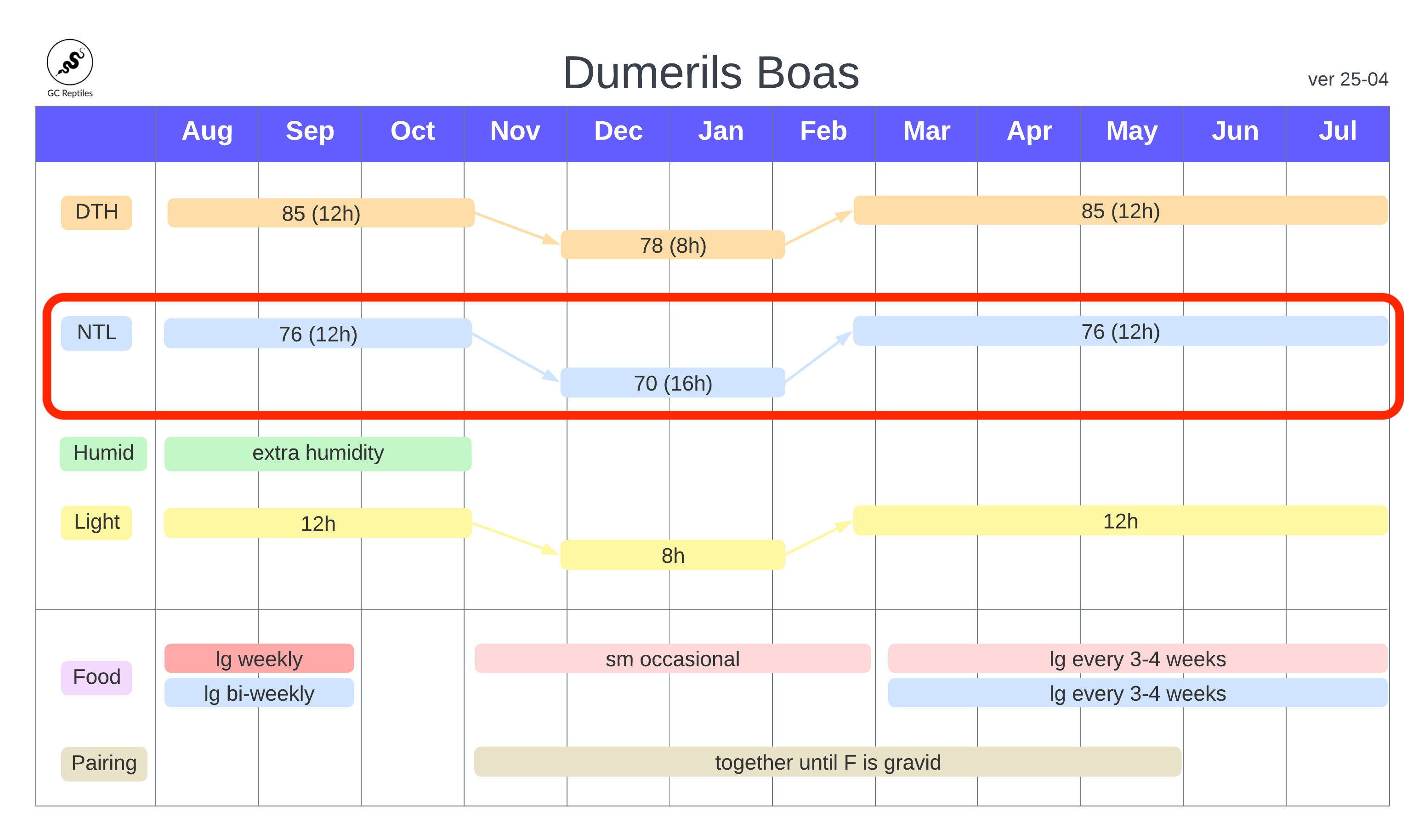
At the end of the daytime heating cycle the setpoint of the thermostat is changed and the cage will gradually drop in temperature to the “nighttime low”. It may take only an hour or two to drop, or it may take most of the night. I don’t think the rate of decrease matters. But the setpoint on the thermostat is adjusted to keep the temperature from dropping further.
Temperature Cycling
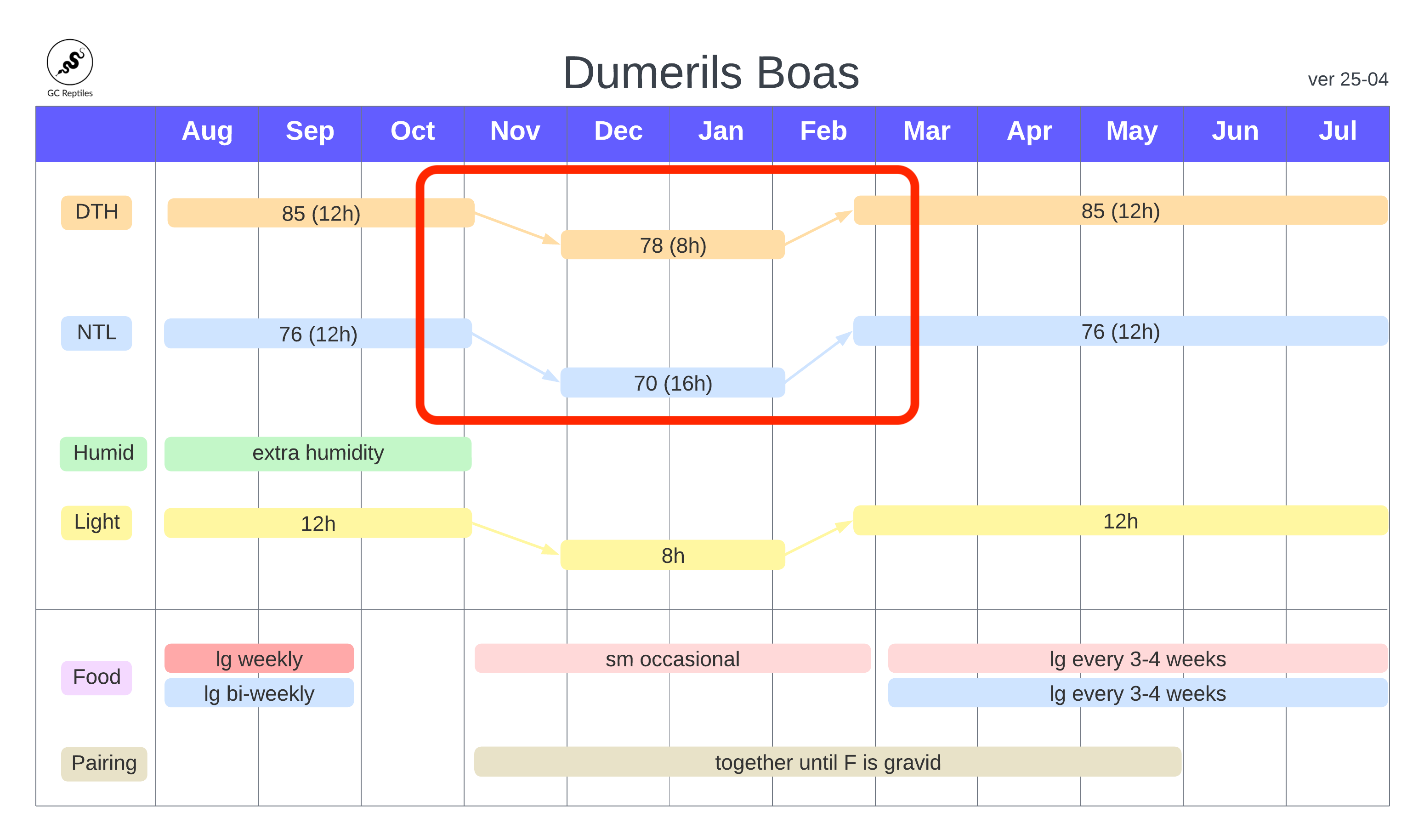
Most animals get a seasonal change at some point during the year. This is called temperature cycling. Most reptiles in the wild that don’t live on the equator have a natural temperature cycle during the year. Many keepers mimic this temperature cycle for snakes in captivity, primarily for breeding but it can also be done to maintain the natural cycles the animal would experience in the wild.
For temperature cycling, I bring the daytime high and nighttime low temperatures down for several months. At the beginning, the temperatures are dropped gradually for about a month, then the new temperatures are maintained for a period of time, and then the temperatures are gradually raised to their new target temperatures over the span of about a month. To do these gradual decreases and increases I use a combination of thermostat setpoint changes and I will also move snakes to different rooms in the house that are cooler or warmer.
Humidity
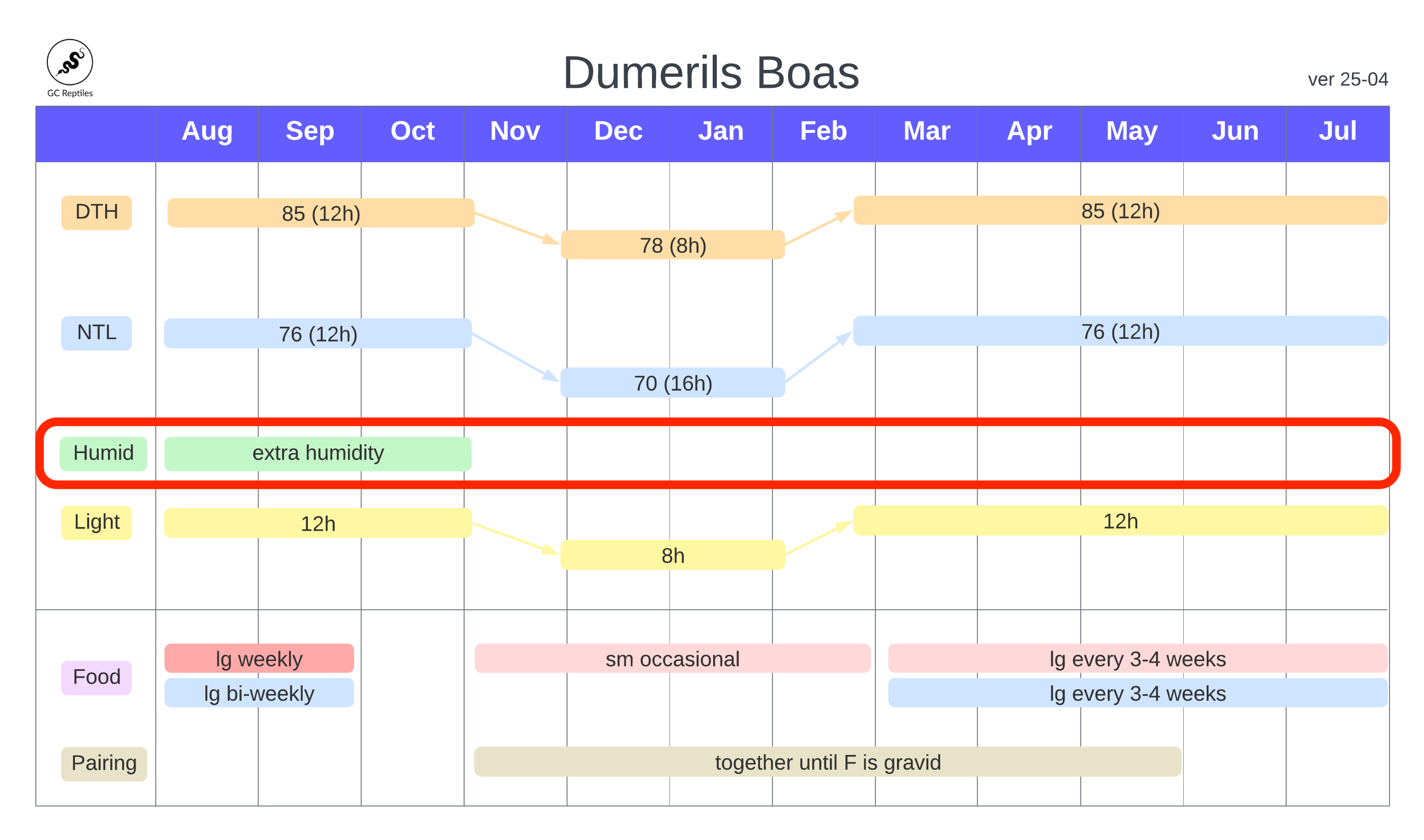
Humidity is pretty straight-forward. I keep my animals on coconut bark substrate and I make sure that the base layer is damp so that the humidity in the cage is in the range that I want. Generally, my room throughout the year is at about 40-45% relative humidity, and I adjust the humidity for tropical species so that their humidity is about 60-80%. More temperate species have their humidity adjusted to be in the 50-60% range.
When talking about humidity I want to point out that each cage has multiple vents in it to allow for air circulation, and there are 6 floor fans in the room pushing air in different directions. So I am able to achieve humid conditions in the cages without the air being stale and the substrate developing mold. It's a balancing act and one that took me several years to nail down.
Lighting
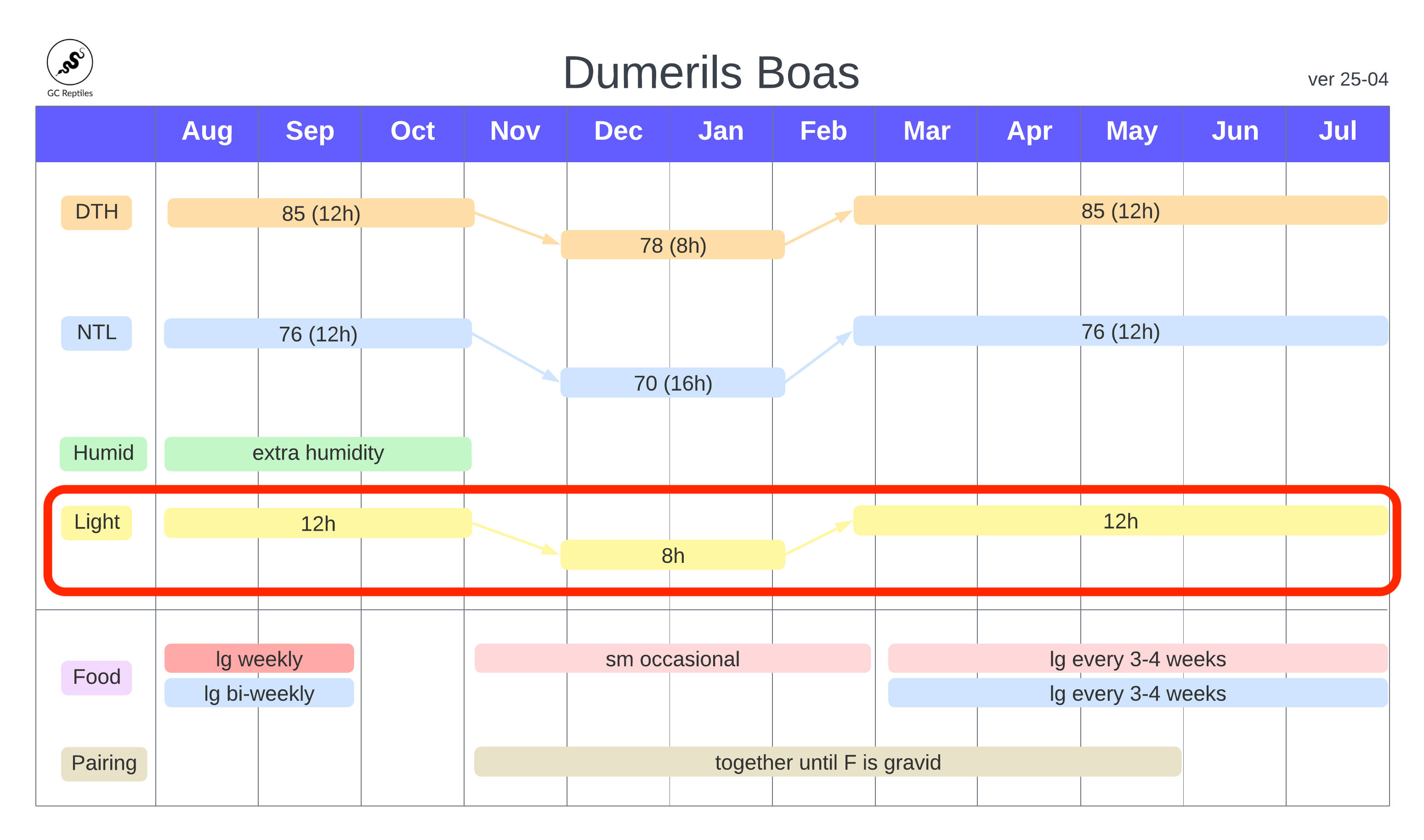
Lighting is also straight-forward. All of my cages have LED lights that are controlled by Wi-Fi programmable switches. The programming on the switches lets me add or reduce hours in the day for the LEDs to be on.
There is also a window in the room, but it only lets in a little bit of light.
Feeding
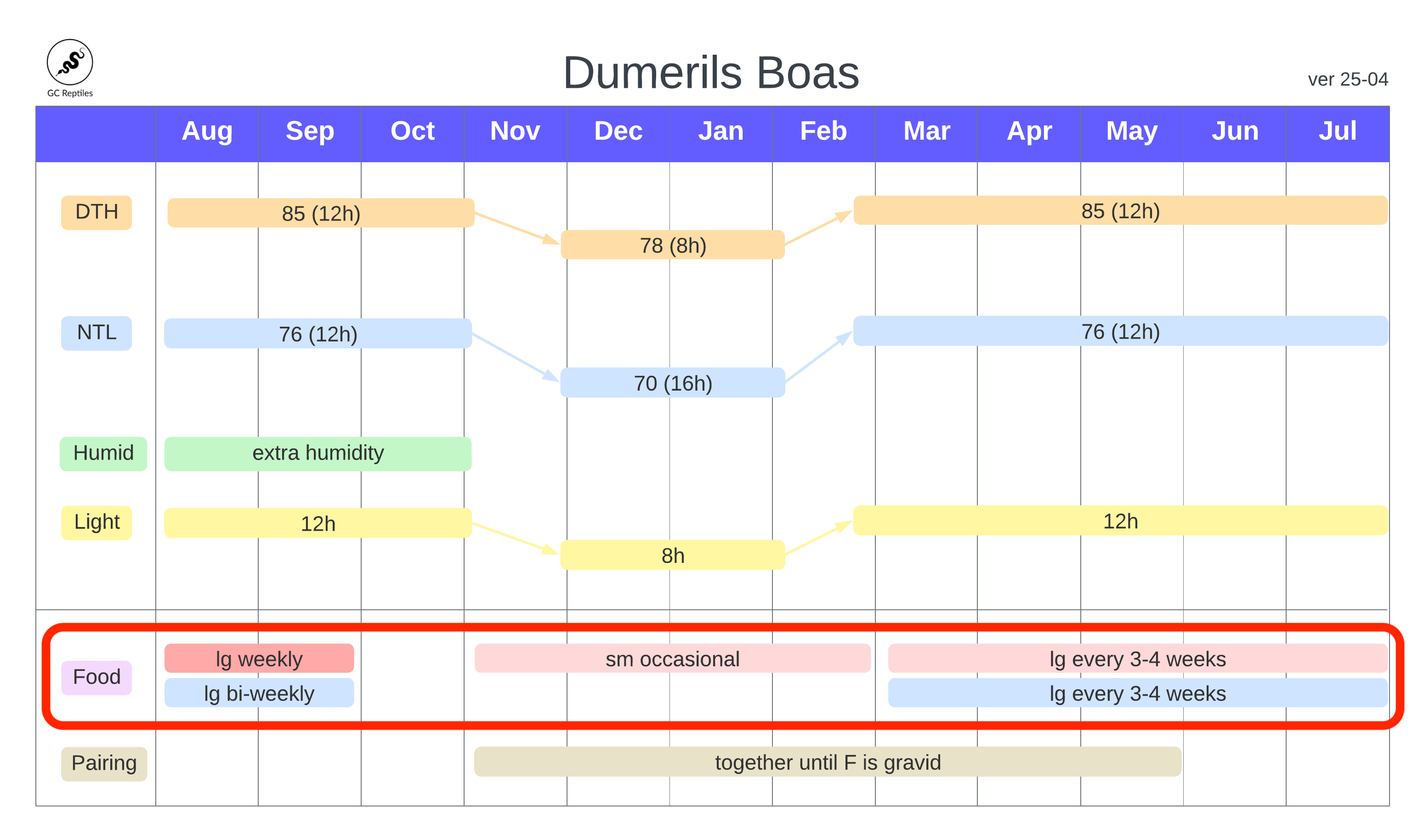
For feeding notice that there is a pink bar that I use for female snakes, and a blue bar for the males. They are pretty simple to understand though. Most of my adult animals get fed once or twice a month for about 6 months of the year. Then there is a period of about 2 months where they tend to get more food than usual. I also make the horizontal bars a darker shade so that I don't miss this when I am reviewing the charts. This extra feeding frequently happens right before males and females are paired together. And then for the more temperate species there is a period of several months where they are not fed at all so that they can brumate.
Be aware that the bars start and stop at particular places during the month. I don't know for sure that it matters, but it's the practice I follow. You might notice for example that a chart will show the pink bar for females of the species beginning earlier in the month than the blue bar for the males of the species. This is deliberate.
Pairing
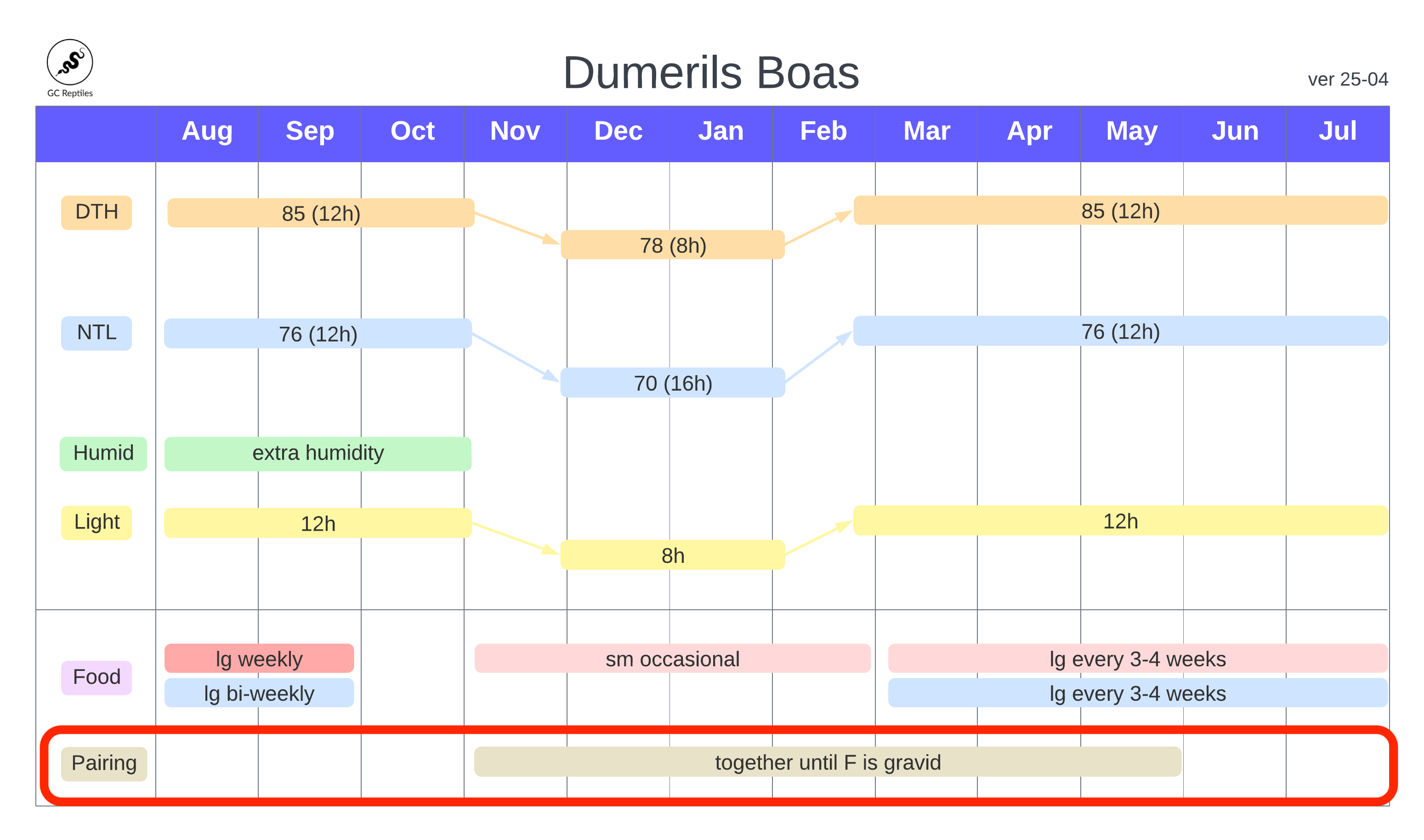
How I use these during the year
My standard practice is to go through all of the species charts at the beginning of each month. And I look for the things that need to change during the new month.
I start by checking all of the temperature readings from the hygrometers around the room and compare them with what the expected temperatures need to be. Then I make start adjusting temperatures for any animals that need it.
I do the same for humidity.
For lighting, I start adjusting the timers that control the lights to lengthen or shorten the daylight period as necessary.
I have a year-round feeding chart that has a row for each of my snakes and 52 columns for each week of the year. I have that chart synced with the species charts. So the feeding adjustments are already dialed in.
Finally I look to see if the pairing of males and females is changing during the new month. Since I don’t feed animals when they are in the same cage together, if there is pairing happening and feeding happening for one or both animals in a cage, I make plans for separating them to feed.
I put all of the changes that have to be made for the month on my whiteboard so that I can track them during the month.
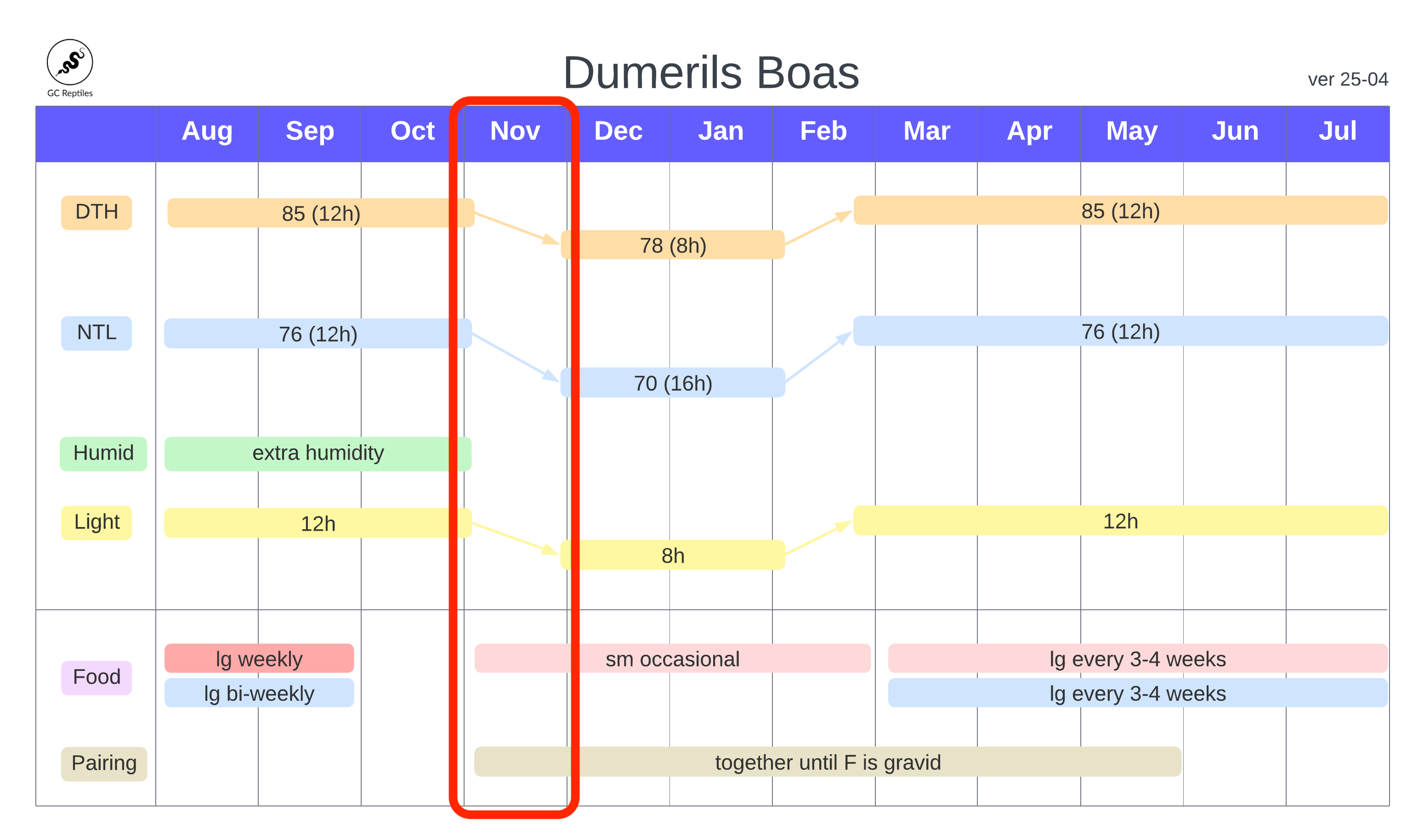
For example, in this chart above, if it were the beginning of November, I would start decreasing the daytime high temperature of my Dumeril's boas, decreasing their nighttime low temperature, decreasing the number of hours of light they are getting, only feeding females during the month, and the females would only get an occasional small meal maybe once or twice during the month. I would also pair male and female Dumeril's boas together.